The Friction Paradox: Designing for Luxury in an Age of Automation
6 min read | cover image by holger kilumetsDisclaimer: Thoughts, essays, and design frameworks are my own and do not reflect the views of my employer.
On almost every product team I’ve worked with, the mandate is identical: strip out friction.
We track funnel drop-offs down to the millisecond, celebrate when a checkout shrinks to a single biometric glance, and treat any pause in the interface as an engineering defect. That instinct isn't inherently predatory; at its best, it represents genuine craft. Nobody wants to deal with broken form fields or confusing navigation when they are trying to buy something they actually need.
The problem arises when seamlessness becomes so pervasive that it bypasses conscious consent.
We are seeing the exact same dynamic play out with generative AI. Because generating copy, images, and mockups now costs nothing in time or effort, the internet is drowning in low-grade "AI slop." The designers and writers doing standout work right now aren’t using AI to flood the room with volume. They are the ones putting friction back into the workflow: slowing down, applying taste, editing ruthlessly, and throwing out nine out of ten generations.
If intentionality is what keeps artificial intelligence from degrading into digital noise, what prevents us from bringing that same maturity to the consumer journeys we build?
To understand how deliberate resistance reshapes behaviour firsthand, I spent the past year designing conscious friction back into four everyday touchpoints in my own life:
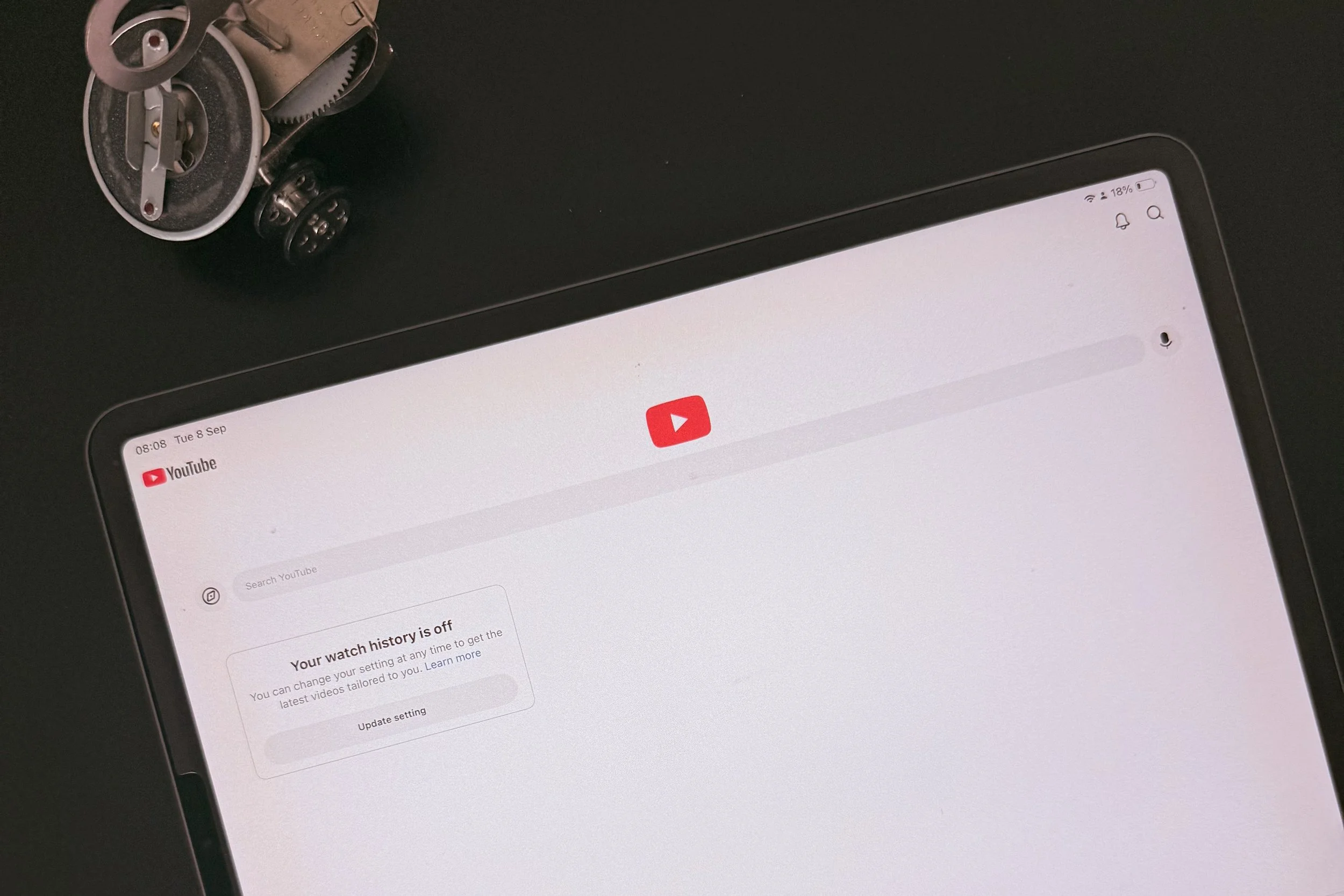
My empty YT landing page allows me to focus on my intent.
I periodically delete the Instagram app and and never save my passwords to iCloud Keychain. The resulting 90-second delay—re-downloading the app and manually keying in an email and password—creates a cognitive pause. In that minute and a half, mindless impulse disappears; if I proceed, it is an active, considered choice.
I removed payment cards from Apple Wallet and stopped using a wallet, carrying only a single, deliberately chosen physical card. When making an online purchase, I have to walk across the room and manually enter sixteen digits. That physical interval guarantees my purchases are considered rather than ambient.
Pausing and clearing my YouTube watch history permanently wiped the homepage into a blank canvas with a simple search box. No auto-playing feeds or algorithmic rabbit holes. If I have a specific software tutorial or interview to watch, I search for it. If I'm just bored, the site gives me nothing to latch onto. It works like a library again.
I maintain only one active streaming service at a time, cancelling before migrating to another. Eliminating catalog sprawl removed decision fatigue, shifting media consumption from passive background noise into an engaged, finished experience.
Luxury was never supposed to be fast, disposable, or frantic. At its core, luxury is defined by ritual, formulation, and patience.
Designing for "The Restorers" and the Shift to Retention
Reintroducing friction is not an act of digital asceticism; it is an act of preservation. Trend forecasting agency WGSN identifies this precise cultural pivot in its future consumer forecasts for 2027 and 2028.
WGSN’s 2027 research tracks the rise of "Suspicious Optimism"—consumers who appreciate technological power but balance it with deep skepticism toward unintended consequences and algorithmic manipulation—alongside "Witherwill," a widespread fatigue with hyper-connectivity that drives deliberate habit disruption. By 2028, this sentiment crystallises into a defining buying archetype: "The Restorers."
The Restorers are not anti-digital. They are anti-depletion. They view status through the lens of mental clarity, discernment, and balance. They seek experiences that reduce cognitive overload, honor their agency, and offer calm rather than manufactured urgency.
To capture The Restorers, product designers must reallocate their energy: stop over-optimising for the transaction, and start designing for loyalty, retention, and the living room experience.
In prestige and luxury retail—particularly luxury skincare and cosmetics—this shift demands an urgent operational rethink. For the past decade, digital commerce teams have operated primarily as acquisition engines: running performance marketing to acquire one-off consumers who hop opportunistically between viral "shelfie" trends, discounted holiday sets, and whatever ingredient went viral on Instagram or TikTok this week.
This hyper-optimized, low-friction acquisition model produces high gross merchandise value on day one, but it is catastrophic for long-term health. It breeds trend-chasing churn. A consumer who buys an $80 serum in a half-second impulse click is the exact consumer most likely to experience post-purchase regret, abandon the product halfway through the bottle, and jump to a competitor's launch six weeks later.
Luxury was never supposed to be fast, disposable, or frantic. At its core, luxury is defined by ritual, formulation, and patience.
Tactical Restraint: Designing for the High-Retention Luxury Consumer
If we want to build lasting trust with discerning consumers without sacrificing enterprise growth, we must design journeys that treat skincare as an ongoing, respectful dialogue rather than a relentless checkout funnel.
Replace the "Viral Haul" with Regimen Stewardship
Trend cycles encourage consumers to layer incompatible actives, resulting in compromised skin barriers and abandoned routines. A brand designing for The Restorer should introduce protective, informative friction at the cart level.Imagine an interface that analyses cart contents and prompts: "You are pairing a high-strength retinoid with a direct exfoliating acid. These may irritate your skin if used simultaneously. Would you like to swap one for our barrier-repair ceramide cream, or stagger your delivery?"
By introducing a speed bump that occasionally says no to a basket-building impulse, the brand proves it cares more about the user's skin outcome than a fleeting average order value. That is the birth of multi-year loyalty.
Elevate Replenishment into a Dignified Cadence
Traditional auto-replenishment programs are frequently designed with dark UX patterns: hard-to-find cancellation buttons and rigid 30-day billing cadences that result in a backlog of half-used bottles cluttering bathroom cabinets.Luxury retention design should honor real-world usage. Products can offer intuitive, visual replenishment calendars: "A 50ml jar used twice daily typically lasts 8 weeks. We'll send you an unobtrusive check-in at week 6 asking if you're ready for your refill, or if you'd like us to hold off."
Giving the consumer absolute agency over the cadence removes the dread of subscription lock-in. It turns an automated extraction of capital into a considerate service touchpoint.
Shift from Transactional Speed to Post-Purchase Guidance
The true luxury purchase journey doesn't end at "Order Confirmed"—that is merely where the relationship begins. Yet most luxury digital ecosystems dump 90% of their engineering resources into the checkout flow, leaving post-purchase support to a generic email tracking link.What if that energy went into post-purchase onboarding? Interactive application rituals, guided morning audio routines, or seasonal check-ins that advise how to adjust application techniques as the climate shifts. When a brand spends time helping a user finish and master what they already purchased, the next purchase doesn't require performance marketing. It happens organically because the product earned its place on the vanity.
Creating moments to pause, verify, and consciously choose will not drive customers away. In an overstimulated economy, slowing down to build genuine craft and lasting retention is the only sustainable way to build luxury.
In physics, you need friction to get traction. Without resistance, tires don't grip; they just spin out.
The belief that every single digital touchpoint must be completely frictionless is outdated. Just as good creators are using human editing and taste to cut through AI noise, product designers need to build experiences that respect people's time, attention, and budgets.
Creating moments to pause, verify, and consciously choose will not drive customers away. In an overstimulated economy, slowing down to build genuine craft and lasting retention is the only sustainable way to build luxury.
